
Why We Moisture Test Every Floor
Last updated: October 22, 2025
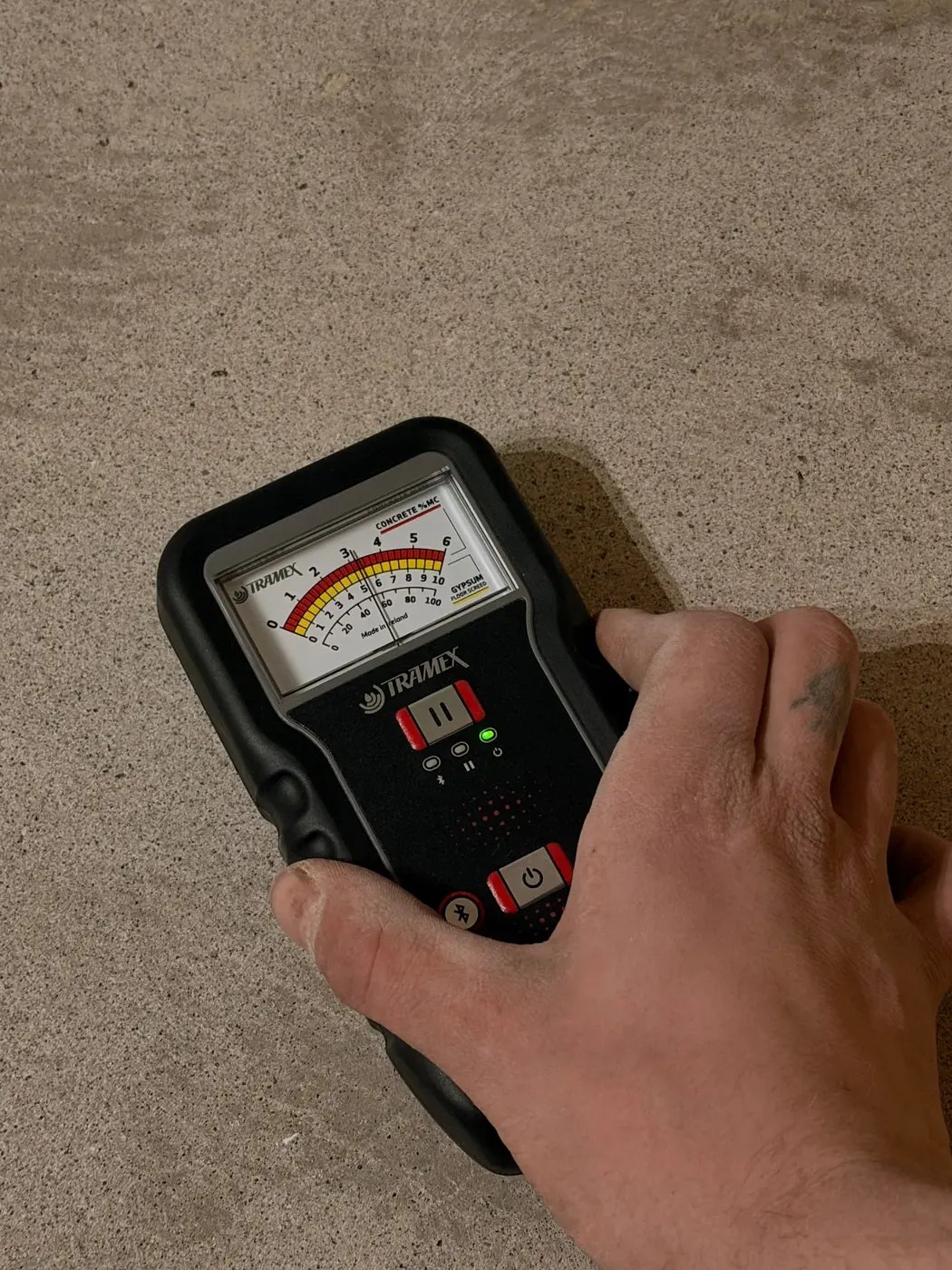
Concrete moisture is one of the conditions that can affect a coating system. That is why we assess every slab before coating, regardless of its age or how dry it looks on the surface.
Concrete can appear dry while still holding moisture below the surface. Moisture movement through a slab is influenced by soil conditions, temperature, humidity, vapor barriers, and the concrete itself.
When a slab has more moisture than a coating system can tolerate, adhesion or appearance problems may occur. Blistering, bubbling, and delamination can have multiple causes, so moisture is evaluated alongside surface condition, contaminants, and preparation.
We use a Tramex CME5 Concrete Moisture Encounter as a non-destructive site-assessment tool. It measures relative moisture conditions near the surface and helps identify areas that need closer review. Its readings are interpreted against the coating manufacturer's requirements and the specific job conditions.
If readings or site conditions raise a concern, we pause to assess the slab and determine whether additional preparation or a manufacturer-approved moisture-control system is required before coating.
New concrete needs sufficient time to cure and dry before coating. Older slabs can also develop moisture-related issues when drainage, soil conditions, or an under-slab vapor barrier changes over time.
Moisture assessment is a short but important part of a professional site evaluation. It helps us make an informed decision before the coating system is installed.
Related Articles
Flake vs Metallic Epoxy: Which is Right for You?
Choosing between flake and metallic epoxy comes down to your space, style, and budget. Learn the key differences.
Diamond Grinding vs Acid Etching: Why Prep Matters
Surface preparation is the foundation of every floor coating. Learn why diamond grinding beats acid etching.